The orthopedic practices growing their patient relationships fastest have something in common. It's not just their clinical reputation. It's how they're built to meet patients — not only during business hours, but at every moment a patient needs direction.
What those practices have figured out is this: online scheduling, urgent care, and 24/7 triage don't compete for the same patient. Each one reaches a different person at a different moment. When all three are running well, patients always have a clear next step — and the practice is always the one providing it.
That distinction matters more now than it ever has. According to Accenture, nearly 90% of patients who switched providers in the past year said they did so because the organization was hard to work with — not because of the quality of clinical care. Patients don't leave because of the care they received. They leave because they couldn't get to it. The practices that solve for it are the ones patients remember and return to.
The Assumption Worth Examining
Most practices that have invested in all three access options believe they've built full coverage. On the surface, that's a fair read.
We have online scheduling. We have urgent care access. We offer after-hours triage. We've covered the bases.
The shift happens when you look at who each option is actually built for. These three options don't serve the same patient. They're not competing for the same moment. Each one activates under a different set of conditions, and stays quiet when those conditions aren't met.
When practices treat all three as versions of the same thing, they naturally invest most in what they know best. Online scheduling gets attention. Urgent care runs well. And 24/7 triage, often the newest addition, can quietly become more of a placeholder than a true lane. A phone number. A contact form. A voicemail box that adds friction rather than removing it.
The good news: recognizing that is the easy part. And the upside when you close the gap is significant.
"These are not three versions of the same thing. They are three distinct lanes — each built for a different patient, at a different moment."
The moment a practice starts thinking in lanes, the access strategy gets a lot clearer. So does the opportunity.
The Three-Lane Model of Orthopedic Access
What is the Three-Lane Model of orthopedic access?
The Three-Lane Model is a framework that shows how online scheduling, urgent care, and 24/7 triage serve different types of patients — not the same patient in different ways. Each lane is built for a specific moment in a patient's decision process. Together, they form a complete access infrastructure. On their own, each one leaves a gap the other two cannot cover.
Lane 1 — Online Scheduling: The Patient Who Is Ready to Book
Online scheduling works for one type of patient: the person who already knows they need an appointment and is ready to commit to one.
This patient has made their decision. They know what kind of visit they need. They're comfortable waiting for an opening. When that's the situation, online scheduling is the most efficient path for everyone. It's available around the clock. It requires no staff to manage in real time. It moves the patient directly into the appointment pipeline.
The one condition: it assumes the patient already knows what they need. For the patient who is still figuring that out — which describes most people in the middle of an acute injury — a different lane is required.
Lane 2 — Urgent Care: The Patient Who Needs to Be Seen Now and Can Get There
Urgent care works for the patient who knows they need to be seen in person — and can make it happen.
This patient is hurt and knows it. They're ready to go. When all of that is true, urgent care is the right answer. In-person evaluation, imaging, real clinical attention — right now. For the patient who can get to a clinic during open hours, this lane is exactly what they need.
But urgent care has real requirements. The patient has to be able to travel. A facility has to be open. The timing has to work. The worker who can't leave a job site. The parent whose child twisted an ankle at 7pm on a Tuesday. The patient who isn't sure if they're hurt enough to justify the trip. For those patients, at that moment, a different lane is the right answer.
Lane 3 — 24/7 Triage: The Patient Who Doesn't Know What They Need Yet
24/7 triage works for the patient who hasn't yet decided which lane applies to them — or for whom neither is available when the injury happens.
Something happened. Something hurts. They don't know if they need the ER, urgent care, or a scheduled appointment. They need help figuring that out before they can do anything else. This lane runs hardest after 5pm, on weekends, and on holidays — exactly when the first two lanes are at limited capacity.
Lane 3 doesn't assume a decision has been made. It helps the patient make one. It's not a booking tool — it's a direction tool. And it's the only lane built to engage at the moment when a patient is most uncertain and needs a real answer the most. Learn more about how HURT!'s 24/7 triage platform fits within a full access infrastructure.
| Lane 1 — Online Scheduling | Lane 2 — Urgent Care | Lane 3 — 24/7 Triage | |
|---|---|---|---|
| Patient State | Decision already made | Decision already made | Uncertain — needs guidance first |
| What It Takes | Specific time slot | Travel + in-person visit | None — direction first |
| Available 24/7? | Usually | Rarely | Yes |
| Requires Travel? | No | Yes | No |
| What It Produces | Appointment | Clinical evaluation | Clarity + next step |
| Most Active | Business hours, evenings | Daytime, early evenings | After hours, weekends, holidays |
The Patient Moment Your Practice Is Already Built to Meet
Why After-Hours Access Is the Highest-Opportunity Window in MSK Care
Across HURT!'s network, 70% of cases come in after hours — nights and weekends. This is one of the most consistent patterns we see, and one of the clearest indicators of when patients most need a reliable place to turn.
A knee injury during a Saturday afternoon game. A child's ankle twisted at Thursday evening practice. A worker's back giving out at the end of the day. These patients are already looking for help. They want to connect with an orthopedic practice. They're reachable — right now. The question is whether your practice is the one that answers.
When that patient goes online at 9pm, your scheduling link is right there. But they don't know which appointment to book. They don't know if this can wait until Monday. They don't know if what they're feeling is serious or manageable. A booking link can't answer those questions — it only works once someone already has the answers.
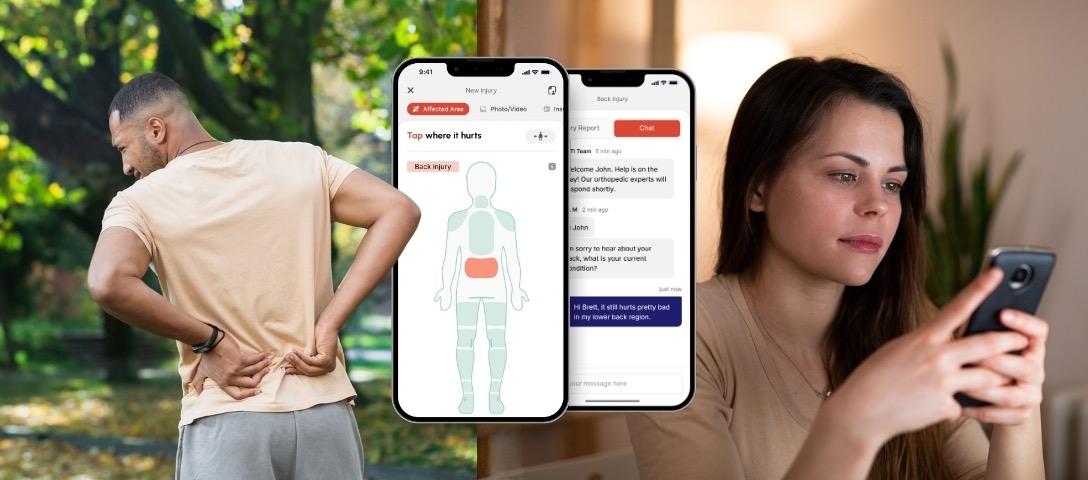
And when they reach out, they're not picking up the phone. 85% of patients now prefer texting or digital communication over a phone call. A voicemail box or a front-desk line that rings unanswered at 9pm isn't just unhelpful. For most patients today, it's the wrong channel entirely.
That window is narrow. Research from rater8 found that 82% of patients give a provider just one or two chances before moving on. A missed moment after hours isn't just a missed appointment. For most patients, it's the last impression — and they'll find a clear answer somewhere else. With a structured triage option in place, your practice becomes the clear answer before they ever look anywhere else.
What Opens Up When All Three Lanes Are Running
"We Already Have Online Scheduling and Urgent Care — Do We Need a Third Lane?"
It's a fair question, and one of the most common ones practices raise when thinking through their access strategy.
A practice with two well-run lanes has strong coverage during business hours. When patients are ready, mobile, and reaching out during the day — those lanes do exactly what they're built to do. What a third lane opens up is coverage at the moments the first two can't reach: 11pm on a Sunday, when a patient is weighing their options and deciding where to turn.
At that moment, that patient isn't comparing your online scheduler to your urgent care. They're deciding whether to get a real answer from your practice or go looking somewhere else. The third lane is what makes your practice the one that answers.
"Would Our Online Scheduler Have Captured These Patients Anyway?"
This is one of the more interesting patterns that emerges when practices activate their third lane. New patients start appearing — ones that weren't coming through before — and the natural question is: where were they before?
What we've seen, consistently, is that these patients weren't sitting on the sidelines waiting to use a scheduler. They were at a moment of uncertainty — not yet ready to book, unsure what they needed, reaching out at a time when a booking link alone wasn't enough. Online scheduling asks the patient to have already made a decision. Triage helps them make one.
The competitive stakes around that gap are real and rising. In 2025, 26% of patients reported that AI tools — including tools like ChatGPT — directly influenced which provider they chose. Among younger patients, 60% say they'll switch providers over a poor digital experience alone, regardless of clinical quality. The practices that show up with a clear, immediate answer at the moment a patient is searching are the ones earning the first contact. The ones that don't are invisible at the most important moment.
The Full Platform Is Already Built: Here's What's Waiting
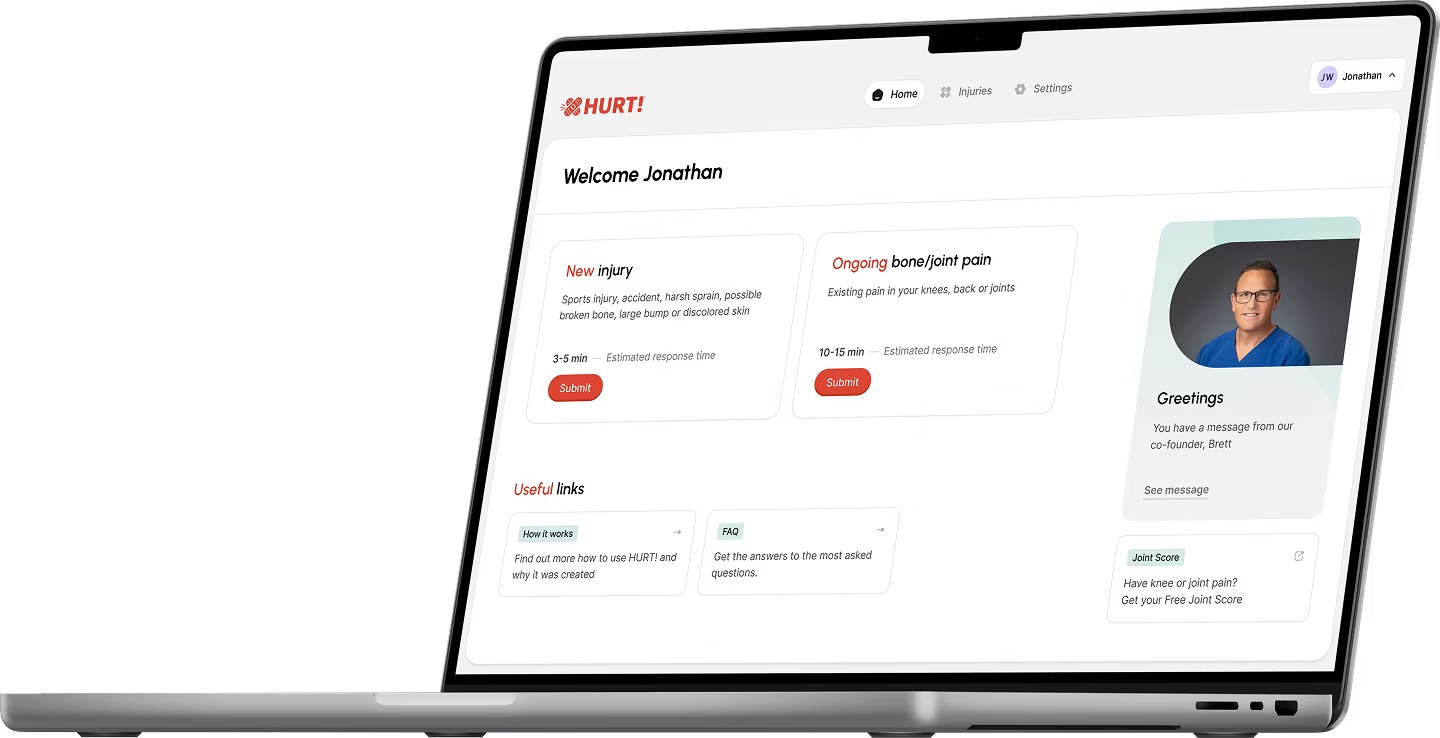
This is worth saying directly: HURT! isn't a triage tool with some add-ons. It's a complete access infrastructure platform — built to connect patients to the right lane at the right moment, at any hour, across all three access points.
The practices seeing the strongest results aren't using HURT! as a backup for off-hours calls. They've built it into how their entire patient access strategy works. That means patients coming in through urgent care are already routed correctly. Patients booking online know they belong there. And patients in the after-hours window — the ones that used to be hardest to reach — now have a direct, immediate path to the practice.
Practices using HURT! for after-hours triage are seeing real results — and so are their patients. And there is significantly more available: not as a project to take on, but as an activation of infrastructure that's already in place. The lanes are already defined. The platform is already built. Getting there is less about adding something new and more about turning on what's already there. Learn how HURT!'s practice solutions work across all three lanes and what full activation looks like in practice.
The Right Direction Starts With the Right First Step
Every patient who contacts your practice is already looking for a direction. The only question is whether your practice is the one that gives it to them.
When all three lanes are active, the first step is always the right step. Ready to book? Online scheduling. Need to be seen now and can get there? Urgent care. Not sure yet? 24/7 triage routes them to clarity — and then directly to whichever lane fits their situation.
Lane 3 doesn't compete with the other two. It feeds them. It ensures the patients who land in online scheduling and urgent care are the ones who belong there — and that the ones who needed direction first got it from you, not from a search engine. Accenture found that patients are 9 times more likely to stay loyal to a practice they find easy to work with. Access infrastructure is the most direct path to that number.
Access Is Infrastructure
The practices building the strongest patient relationships aren't doing it by going all-in on one access channel. They're doing it by making sure all three are working — and working together.
Online scheduling. Urgent care. 24/7 triage. Not three products. Three lanes — each built for a different patient moment, each reaching someone the other two can't.
When all three are running, every patient has a place to land. Explore HURT!'s practice solutions to see how full three-lane access infrastructure works in your market.
Frequently Asked Questions
What is the difference between online scheduling and 24/7 triage?
Online scheduling works for patients who have already decided they need an appointment and are ready to book. 24/7 triage works for patients who haven't made that decision yet — they need guidance first. The two lanes serve different patient states and different moments. They work best when both are active, because together they cover the full range of how patients arrive.
Would these patients have booked through online scheduling without triage?
In most cases, no — and that's actually good news. It means triage is reaching a patient population that online scheduling wasn't able to reach before. A patient in the middle of an acute injury, reaching out after hours, and unsure what kind of visit they need is not yet ready to book. Triage brings them to the point of clarity. Online scheduling takes them from there. These lanes work in sequence, not in competition.
Is HURT! just a triage tool?
No — and this is one of the most important things to understand about the platform. HURT! is built to support a practice's full access infrastructure across all three lanes. Partners using it exclusively for after-hours triage are getting real value, but the platform is designed to do much more: routing patients correctly at every access point, at every hour. Full activation doesn't require a major initiative — it's largely a matter of turning on what's already there.
Does 24/7 triage replace urgent care?
No — and it's not trying to. Urgent care and 24/7 triage serve different patients at different moments. Urgent care is built for the patient who has already decided they need to be seen and can get there. 24/7 triage is built for the patient who hasn't made that call yet. In the Three-Lane Model, triage often routes patients toward urgent care when that's the right fit — which actually makes urgent care more efficient by ensuring the right patients arrive through it.
What is access infrastructure in MSK care?
Access infrastructure is the system that determines how patients reach your practice, get their questions answered, and take their next step. It includes online scheduling, urgent care, and 24/7 triage — not as separate products, but as connected lanes that together serve every type of patient at every hour. When all three are active and working together, patients always have a clear path to the right next step. That's the foundation a strong patient relationship is built on.
Related Articles
Recover Faster With the HURT! App
Most injured patients don't need the ER — they need expert advice, fast. Dr. Brett Miller, orthopedic specialist and HURT! founder, explains how the free app connects injured patients directly to an orthopedic specialist in under four minutes, helping them skip costly and unnecessary ER visits. With 100% of members kept out of the ER since launch, HURT! is redefining how bone and joint injuries get treated from the very first moment.