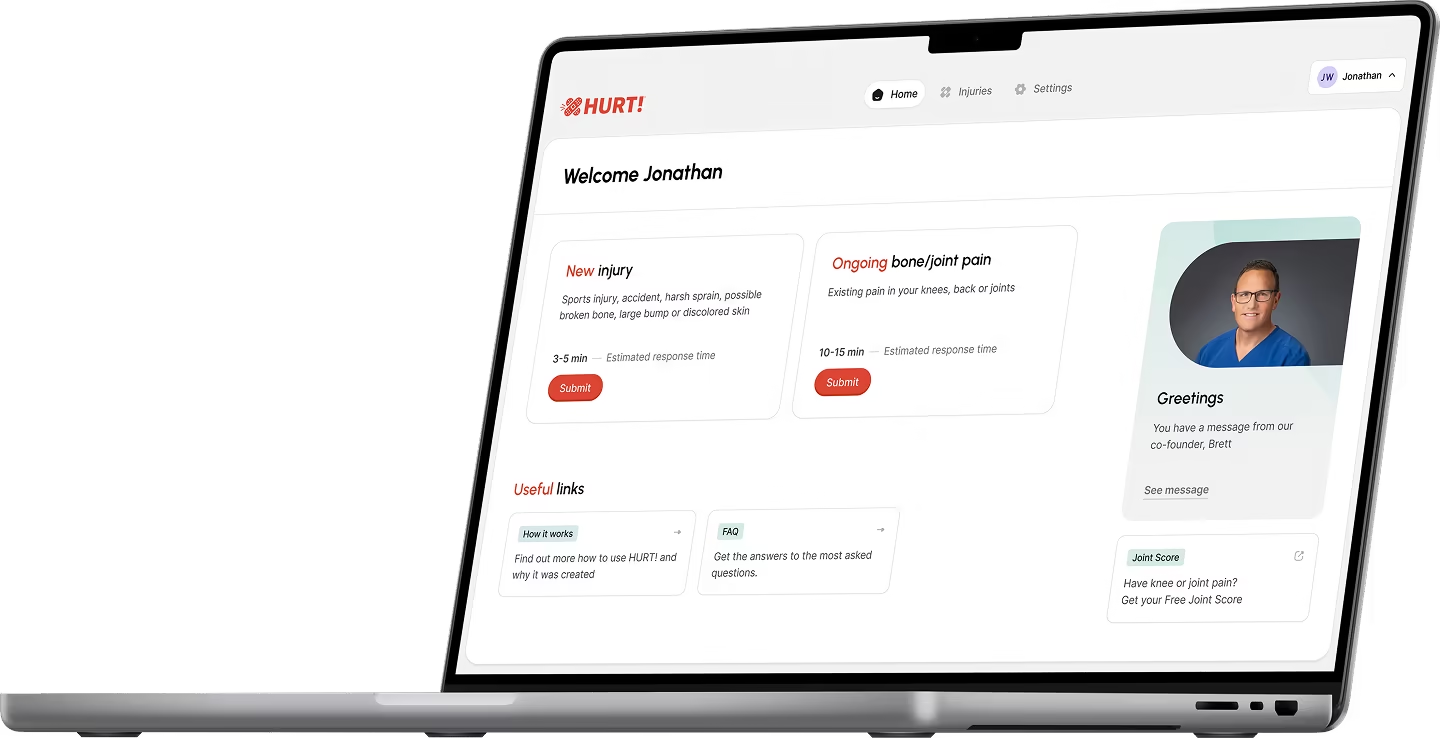
Digital Recovery
The missing lane in modern physical therapy.
HURT! Digital Recovery for musculoskeletal injuries extends recovery beyond the clinic — without handing off care, lowering standards, or adding after-hours burden.
This isn’t traditional digital PT or RTM.
It’s a third lane of care, built for practices that want control, continuity, and scale.
HOW IT WORKS
Your recovery, Powered by HURT!
A modern care model that extends guided MSK movement support beyond the clinic visit ‒ without changing how you practice.

Care Starts with the Treating Clinician
Every HDR experience begins with a licensed clinician making the clinical call ‒ just like they do today.

Recovery Extends
Beyond the Clinic
When appropriate, care continues digitally ‒ guided and aligned with the original plan of care.

Everything Stays
Inside Your Practice
Progress, visibility, and accountability remain within your ecosystem ‒ not handed off to third-party platforms.
Growth through Structure
Don't Just Extend Care. Multiply Its Impact.
Most MSK practices already deliver excellent care — the problem is how often that care breaks down outside the clinic.
HDR strengthens what you already do by keeping patients engaged, guided, and accountable between visits without adding staff, after-hours work, or disconnected tools.
The result isn’t just better access, it’s care that holds together when traditional models start to fray.
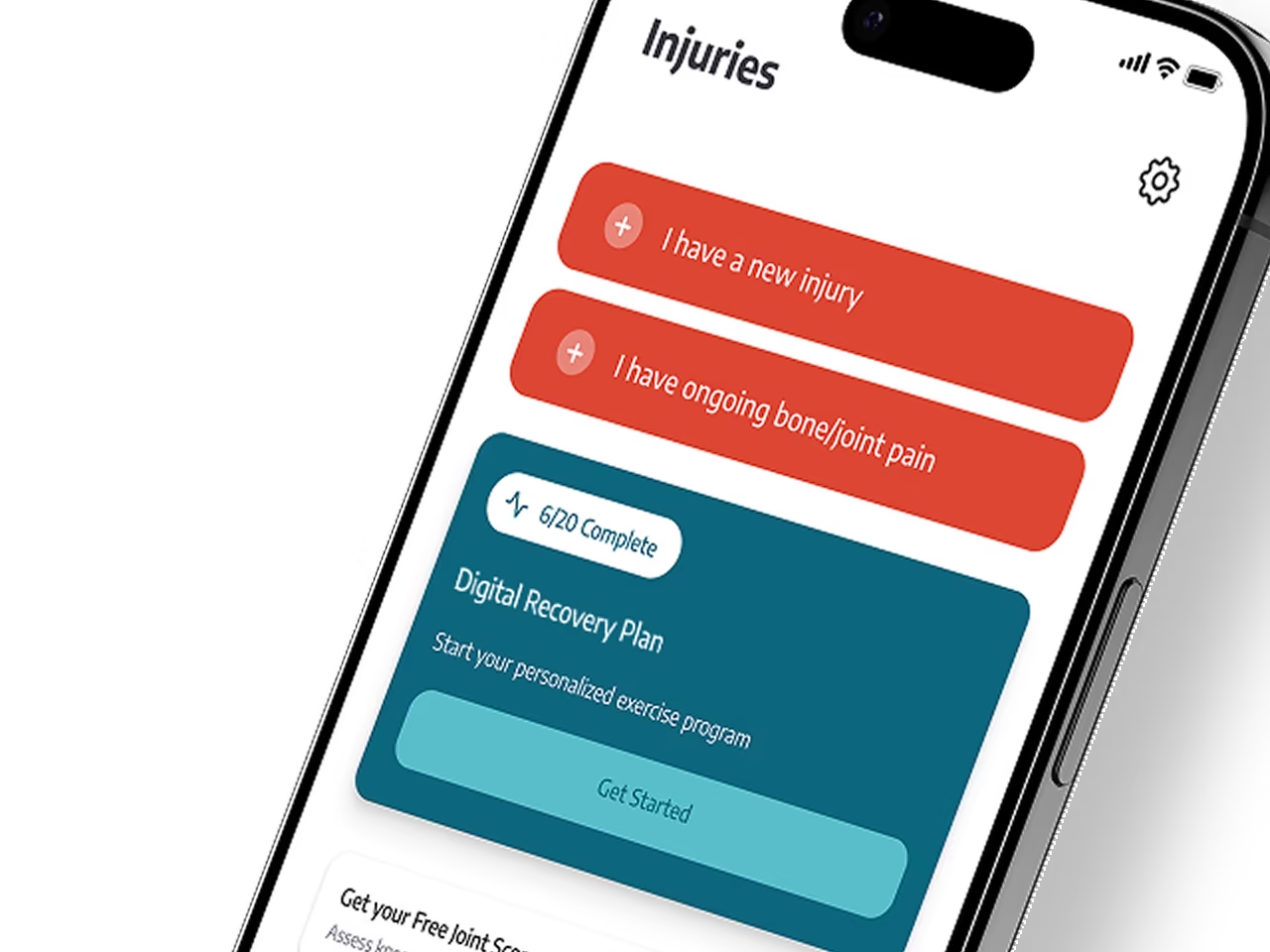
Consistent Patient Engagement
Care continues when visits end, not when schedules allow.
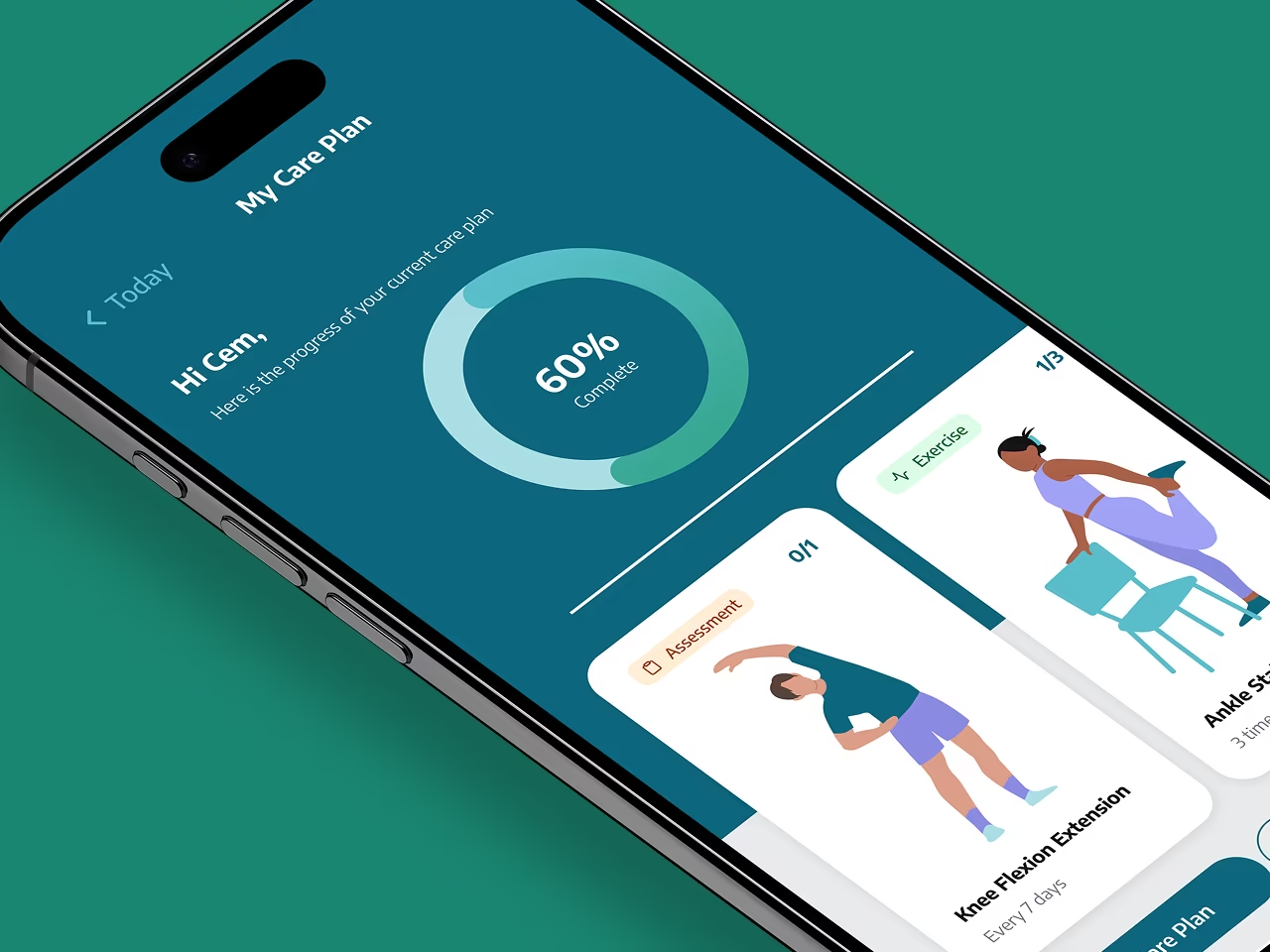
Stronger Follow Through
Patient Stay Connected to their plan of care, even outside the clinic.
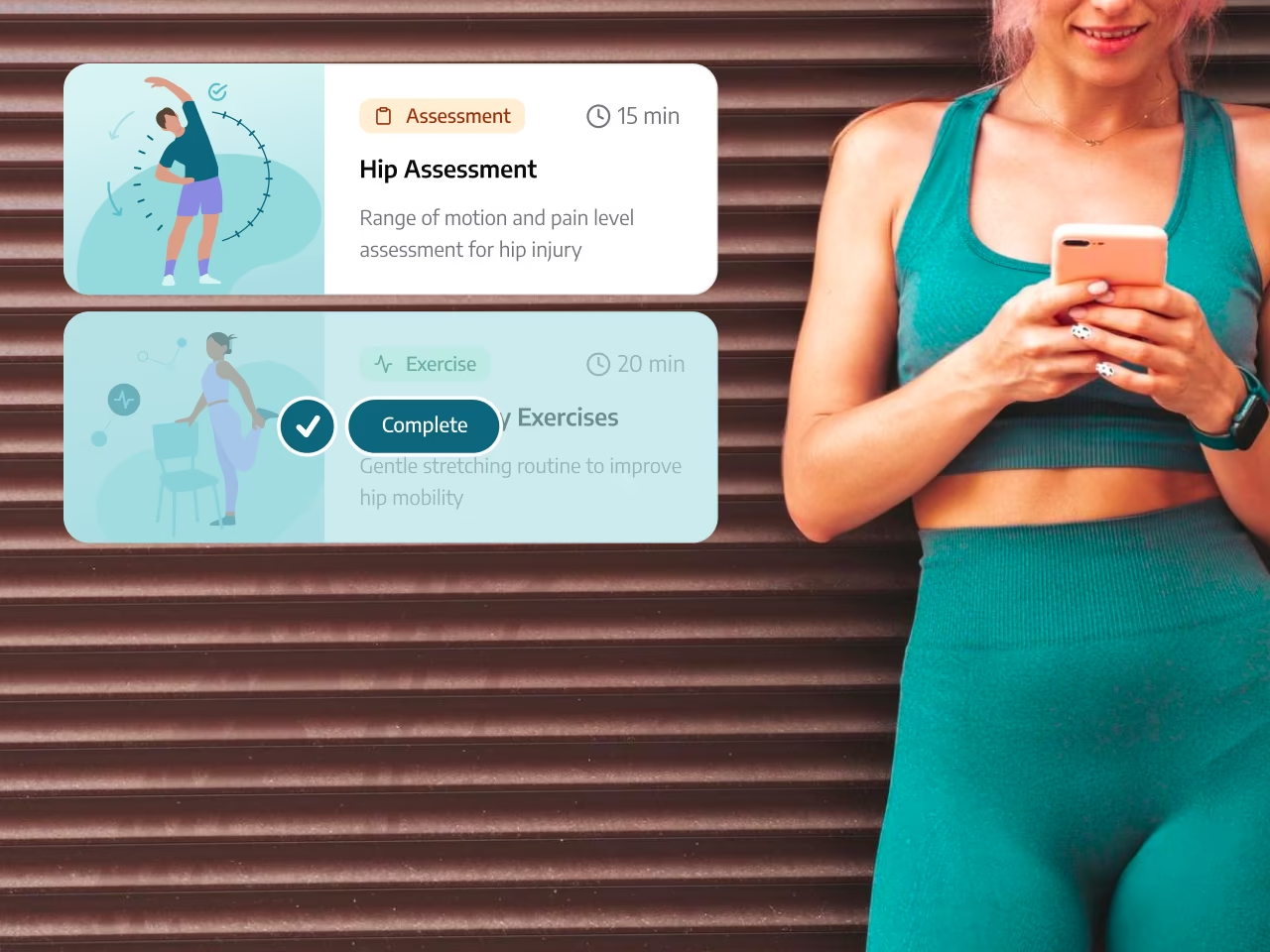
Always-On Care Access
Recovery adapts to real life without
creating extra work for your team.
Recovery That’s Finally Aligned With How Care Should Be Accessed
A better way to extend MSK care— without breaking what already works.
Ownership Stays Where It Belongs
HDR was built to extend your care model, not replace it, reroute it, or compete with it. Patients stay yours. The brand stays front & center. The economics stay aligned.
Capacity Without Burnout
By shifting the right moments of recovery beyond the clinic, practices regain capacity for new evaluations and complex care — without asking more of already stretched teams.
Designed for MSK Recovery
This isn’t a wellness app retrofitted for recovery. HDR was built with clinical guardrails, progression logic, and realities clinicians deal with every day in mind.
Incentives That Actually Line Up
HDR aligns what practices care about most: patient outcomes, operational sanity, and financial health instead of forcing tradeoffs between them.
Reporting, analytics, and workflow visibility are built into the platform and best seen live.
Where
Traditional MSK Care
Falls Short
Patterns we consistently see when care stops at the clinic door. Based on industry benchmarks and observed care patterns.
Practice-level metrics and outcomes are reviewed during the demo and refined as partners go live.
Adherence
Most MSK patients struggle to stay consistent between visits
Without guided support between appointments, rehab adherence drops — even when care plans are well designed.
Capacity
Clinic time is consumed by visits that don’t always require a table
Highly trained clinicians spend significant time on rehab moments that could be safely supported outside the clinic.
Visibility
Practices often don’t know there’s a problem until the next visit
When care only happens in person, setbacks between visits go unseen — delaying intervention.
Structured Launch
& Activation Framework
HURT!'s Digital Recovery platform is activated through a structured onboarding framework that aligns clinical leadership, rehabilitation teams, and operational oversight within your existing care model.
1
Recovery protocols are incorporated into the platform in alignment with your clinical standards
2
Clinical teams are equipped with guided onboarding and dashboard visibility
3
Activation is aligned to your existing clinical workflows
4
Performance and engagement visibility is centralized within SuperDash
FAQ
Yes. HDR is designed to align with your practice’s clinical philosophy and treatment approach. Protocol customization and configuration are discussed during implementation to ensure workflows and care standards are preserved.
Patients need to be clinically appropriate for HDR and have access to a camera-enabled device (smartphone, tablet, or computer). Clinical eligibility and care decisions always remain with the PT.
HURT! Digital Recovery (HDR) is designed for autonomous, low-complexity MSK patients who require minimal manual therapy — including prehab, straightforward progression, and mid-to-late stage post-op care. Final eligibility is always determined by the clinician.
No. HURT! Digital Recovery (HDR) extends care when it makes clinical sense & does not replace in-person PT. The practice remains the clinical owner, and patients are never redirected to third-party providers.
Your licensed clinicians remain fully in control of care decisions, progression, and escalation. HDR supports clinical teams. It does not automate or override clinical judgment.
HDR is introduced through a structured onboarding process that aligns surgeon oversight, rehabilitation workflows, and operational leadership within your organization. Implementation details are reviewed during activation planning to ensure alignment with your clinical model.
Orthopedic Access, Reimagined
Ready to change how patients access MSK care for the better?
Join the nation's leading orthopedic practices.