Table of Contents
You noticed something different this World Cup. Around the 22-minute mark of each half, the referee blows the whistle, but not for a foul or substitution. Play stops. Players hydrate. Then it resumes.
It's mandatory now. Every match, every half, no exceptions — regardless of weather, stadium conditions, or temperature. FIFA made it a rule for the 2026 tournament, and the science behind that decision is worth understanding. Not because you're a professional soccer player. Because your body works the same way theirs does.
Why FIFA Made Hydration Breaks Mandatory in 2026
Previous World Cups had conditional water breaks — triggered only when heat exceeded specific thresholds. What changed for 2026 is that FIFA standardized them across all 104 matches. The rule applies whether the stadium is climate-controlled or open-air, whether it's 65°F or 95°F.
The impetus came from the 2025 Club World Cup in the United States, where heat and humidity created real player welfare concerns. FIFA's chief tournament officer put it plainly: every game gets a three-minute hydration break in each half, no matter what.
That's a governing body for professional sport looking at its best-conditioned athletes and saying: we're not leaving this to chance.
What Dehydration Actually Does to Your Body
Here's what most people don't know. By the time you feel thirsty, your muscles, tendons, ligaments, and joints are already working harder than they should be.
Dehydration affects the full spectrum of musculoskeletal tissue, not just joints. Here's what's happening at each level:
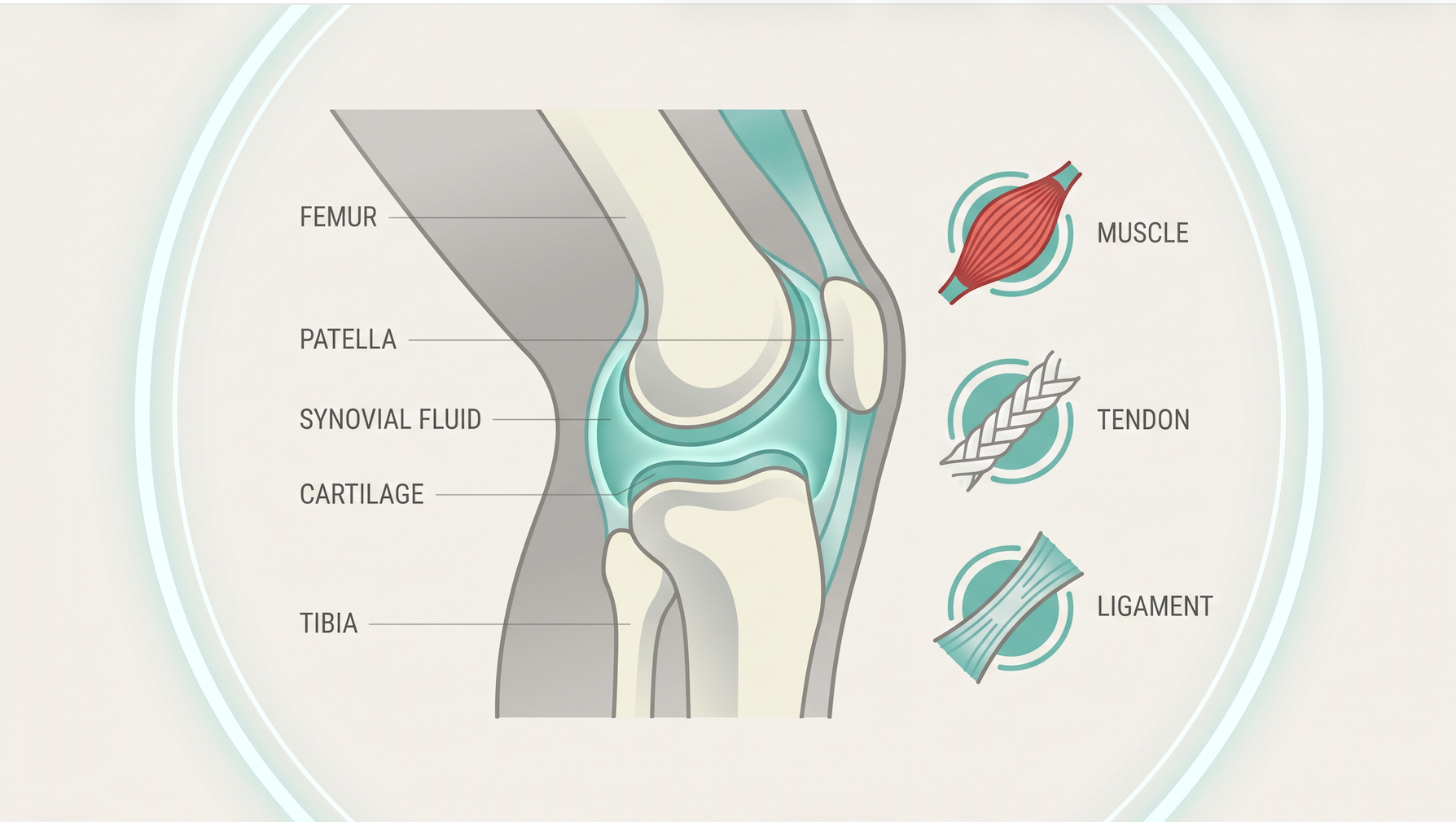
Joints and cartilage. Synovial fluid, the liquid that lubricates your joints and allows cartilage surfaces to glide smoothly, is water-dependent. When you're dehydrated, synovial fluid decreases. Cartilage, which is composed largely of water, begins to lose its shock-absorbing capacity. The result is more friction, more stress, and more wear on surfaces that need hydration to function correctly.
Muscles. Dehydrated muscle generates less force, fatigues faster, and loses the elasticity that protects it during explosive or high-load movements. A muscle that can't contract and release efficiently is a muscle that's closer to injury.
Tendons and ligaments. Connective tissue is highly water-dependent. Dehydration reduces tendon and ligament pliability, making them less able to absorb the mechanical stress of repetitive loading or sudden changes of direction. This is the tissue-level explanation for why dehydrated athletes sprain and strain more easily.
It doesn't take extreme heat or elite-level exertion to get there. Mild dehydration, the kind that happens on a warm practice day without enough water, is enough to change how every layer of musculoskeletal tissue functions.
Heat Index: Why Temperature Alone Doesn't Tell the Whole Story
One thing FIFA's hydration rule implicitly recognizes is that air temperature is an incomplete measure of physiological stress. What matters is how the body experiences the environment, and that's a function of both heat and humidity together.
Heat index is the combination of air temperature and relative humidity that reflects what conditions actually feel like on the body. At 90°F with 30% humidity, the felt temperature is around 90°F. At 90°F with 80% humidity, it's closer to 113°F, a completely different physiological demand on the same body.
High humidity impairs the body's ability to cool itself through sweat evaporation. When sweat can't evaporate efficiently, core temperature rises faster, fluid loss accelerates, and the cascade of dehydration, including all of the musculoskeletal effects above, begins earlier and progresses faster.
This is why the 22-minute break applies regardless of stadium conditions. Air conditioning controls air temperature. It doesn't replicate the full thermoregulatory demands of outdoor athletics.
For recreational athletes, coaches, and active adults: temperature is a starting point, not the whole picture. If it's warm and humid, your hydration needs are higher than the thermometer alone suggests.
The MSK Injuries Most Linked to Dehydration
Dehydration doesn't cause injuries in isolation. But it creates conditions that make specific injury patterns far more likely across every tissue type.
Ankle sprains. Dehydration slows neuromuscular response time and reduces ligament pliability, so both the reflex and the tissue become less protective when your ankle starts to roll.
Hamstring and quad strains. Dehydrated muscle is less elastic. Under the explosive load of a sprint, a cut, or a jump landing, less elastic muscle tears more easily.
Tendon injuries. Patellar tendinitis, Achilles tendinopathy, and rotator cuff irritation all have a dehydration component. Tendons under load in a dehydrated state experience more mechanical stress and recover more slowly between sessions.
Ligament sprains. Reduced ligament pliability from dehydration lowers the mechanical threshold for injury, meaning it takes less force to cause a sprain when connective tissue is inadequately hydrated.
Knee pain and meniscal stress. Less synovial fluid means more friction across the knee joint during repetitive impact activity. People who run, play recreational sports, or spend hours on their feet feel this as aching, stiffness, or that grinding sensation at the end of a long day.
Low back pain. The intervertebral discs in your spine are highly water-dependent. Dehydration reduces disc height and the hydraulic support that keeps your spine absorbing load correctly, a meaningful driver of discogenic low back pain, particularly in people who sit for extended periods or lift repetitively.
The players stopping for three minutes at the World Cup are treating hydration as a structural requirement. Most recreational athletes treat it as an afterthought.
Hydration and Recovery: The Part Most People Miss
The conversation about hydration usually focuses on prevention. What gets less attention is what happens after an injury is already present.

If you're recovering from an orthopedic injury (a post-surgical knee, a shoulder strain, a disc issue), hydration directly affects how efficiently your tissues heal. Collagen synthesis, the process your body uses to repair tendons and ligaments, requires adequate cellular hydration. Inflammation regulation is impaired under dehydrated conditions.
Recovery isn't just about doing your exercises, but rather it's the whole system: hydration, sleep, load management, and structured progression all working together. Miss one consistently and you slow the others.
The Three Recovery Options and Where Hydration Fits in All of Them
When someone is recovering from an MSK injury, the clinical question is which pathway fits their situation:
In-person rehab is best for complex presentations, acute post-surgical care, or cases requiring hands-on manual therapy.
Hybrid rehab combines clinic-based evaluation and higher-complexity care with home-based follow-up for routine sessions.
Fully Digital Recovery (like HURT! Digital Recovery) is a structured home-based program where your provider sets the plan, you complete your exercises with real-time form guidance, and your provider monitors your progress remotely.
Regardless of which pathway is right for you, the variables outside the clinical setting matter as much as the exercises themselves. Hydration is one of them.
A Practical Hydration Strategy for Active Adults
FIFA built mandatory breaks into competition because they couldn't rely on athletes to self-regulate under pressure. You probably don't have a referee stopping your run at the 22-minute mark. Here's what the equivalent looks like in real life:
Before activity: Arrive pre-hydrated. Your urine color is the simplest check. Pale yellow means ready.
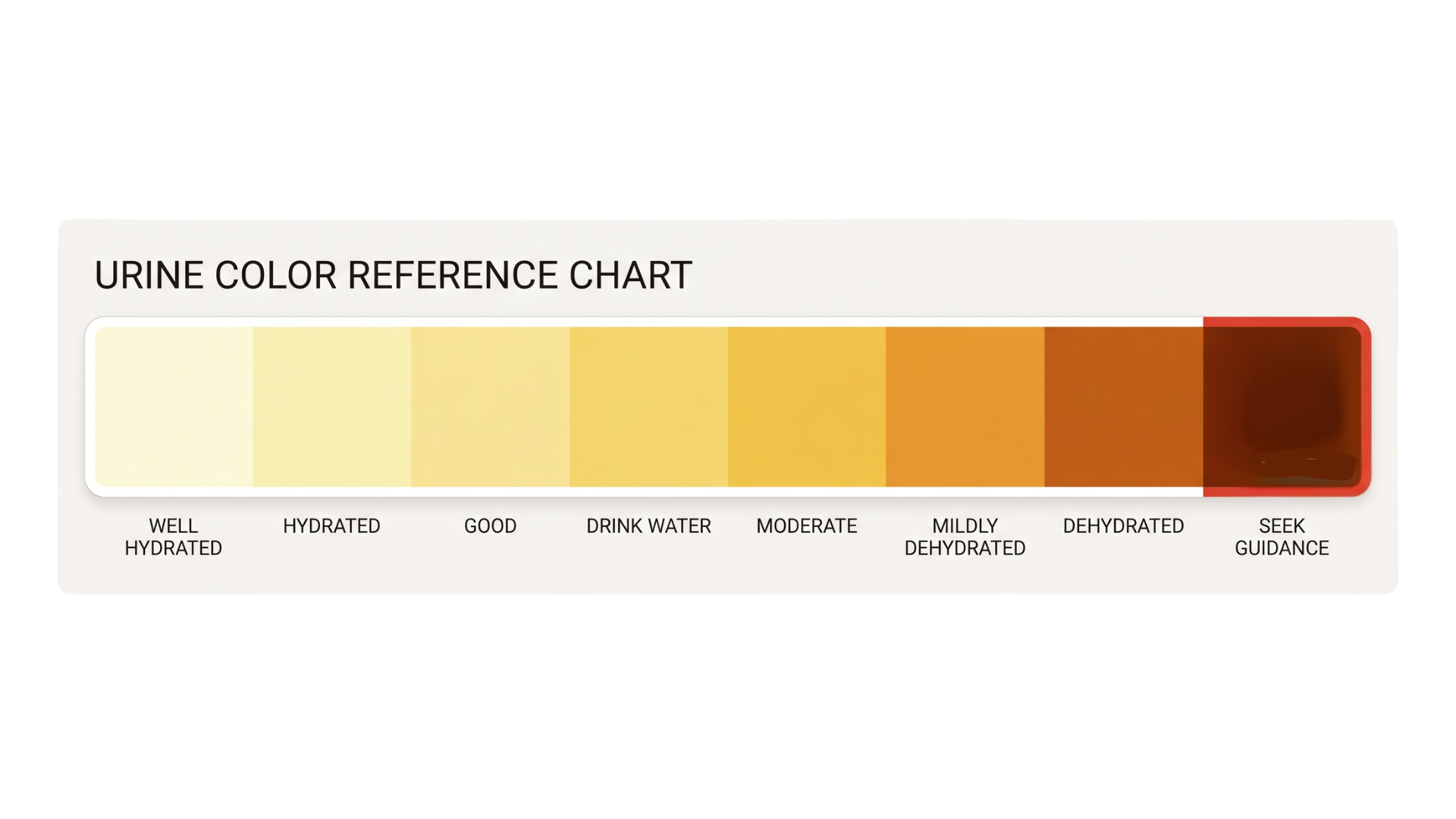
During activity: Drink consistently, not reactively. Waiting for thirst means you're already behind. In high heat-index conditions, increase your intake, because fluid loss is accelerating even when it doesn't feel like it.
After activity: Rehydrate with electrolytes after sustained exertion, not water alone. Sodium helps your cells retain fluid.
Daily baseline: Hydration is cumulative. How well-hydrated you are the day before a hard workout matters as much as what you drink during it.
If you're in recovery: Ask your provider about hydration targets. Recovery load and tissue healing demands vary by condition and stage.
When Hydration Isn't the Problem
Good hydration habits protect you. They're not a substitute for guidance when something actually goes wrong.
If you've rolled an ankle, felt something give in your knee, or woken up with back pain that isn't responding to rest, that's a different conversation. The mistake most people make is waiting. They wait for the pain to resolve on its own, wait for an appointment to open up, wait until the issue feels serious enough to act.
That delay is where avoidable complications develop. A minor sprain becomes chronic instability. An early disc issue becomes something that requires more intervention. The first 24 to 48 hours after an injury are when direction matters most, and exactly when appointments are hardest to get through traditional channels.
HURT! connects you to orthopedic-trained clinicians around the clock. Not general urgent care. Not a chatbot. Structured guidance on what you're dealing with, what the right next step is, and whether this needs escalation or can be managed with activity modification.
If something doesn't feel right, get clarity now— not next week.

.png)