Table of Contents
Your patients are already searching for orthopedic guidance on their phones. The question isn't whether a digital access tool belongs in your practice. It's whether the one you're considering is built for orthopedics specifically, or adapted from something else entirely.
For a practice managing demand, after-hours volume, and referral capture simultaneously, that distinction shows up in your numbers.
Here's what to look for.
1. Built for musculoskeletal care, not general urgent care
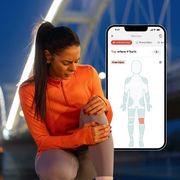
Most digital triage tools are designed for general symptom checking. Orthopedic injuries don't follow a general protocol. A patient with a possible fracture, a weekend athlete with knee instability, and a postoperative patient with swelling each need a different response, and a general app can't reliably sort them.
Look for a platform where the clinical logic is specific to the MSK pathway: fracture vs. strain, acute vs. chronic, needs imaging vs. needs observation. That specificity is what separates access infrastructure from a generic chatbot.
2. Captures after-hours demand, not just manage business hours
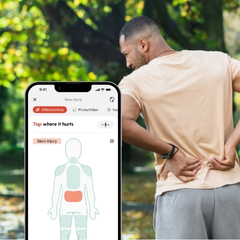
Most orthopedic injury demand doesn't arrive between 9 and 5. It arrives Friday night, Saturday morning, and during holidays. If your digital tool only operates when your front desk does, you're not solving the access problem. You're digitizing what already exists.
The right orthopedic app functions as a structured front door around the clock. Every case that comes in after hours and routes correctly to your practice is a case that doesn't go to a competitor, an urgent care, or an ER.
.png)
3. Human-led, not bot-dependent
There's a meaningful difference between a structured conversation with a trained clinician and a chatbot running a decision tree. Patients in pain or uncertainty notice. So do the outcomes.
Human-led triage, where orthopedic-trained professionals guide the conversation, produces higher trust, better routing accuracy, and stronger appointment conversion than fully automated alternatives. If the platform you're evaluating is entirely AI-driven at the patient-facing layer, ask whether it has been validated against real orthopedic case outcomes.
4. Routes patients, doesn't just inform them
Telling a patient they "may want to see a doctor" is not the same as routing them to your practice, confirming their appointment pathway, and tracking that case through to conversion.
Look for a platform that closes the loop: the patient gets guidance, the case is categorized, and your practice receives a structured handoff. Anything less leaves too much to chance and too much revenue on the table.
5. Gives you data you can actually use
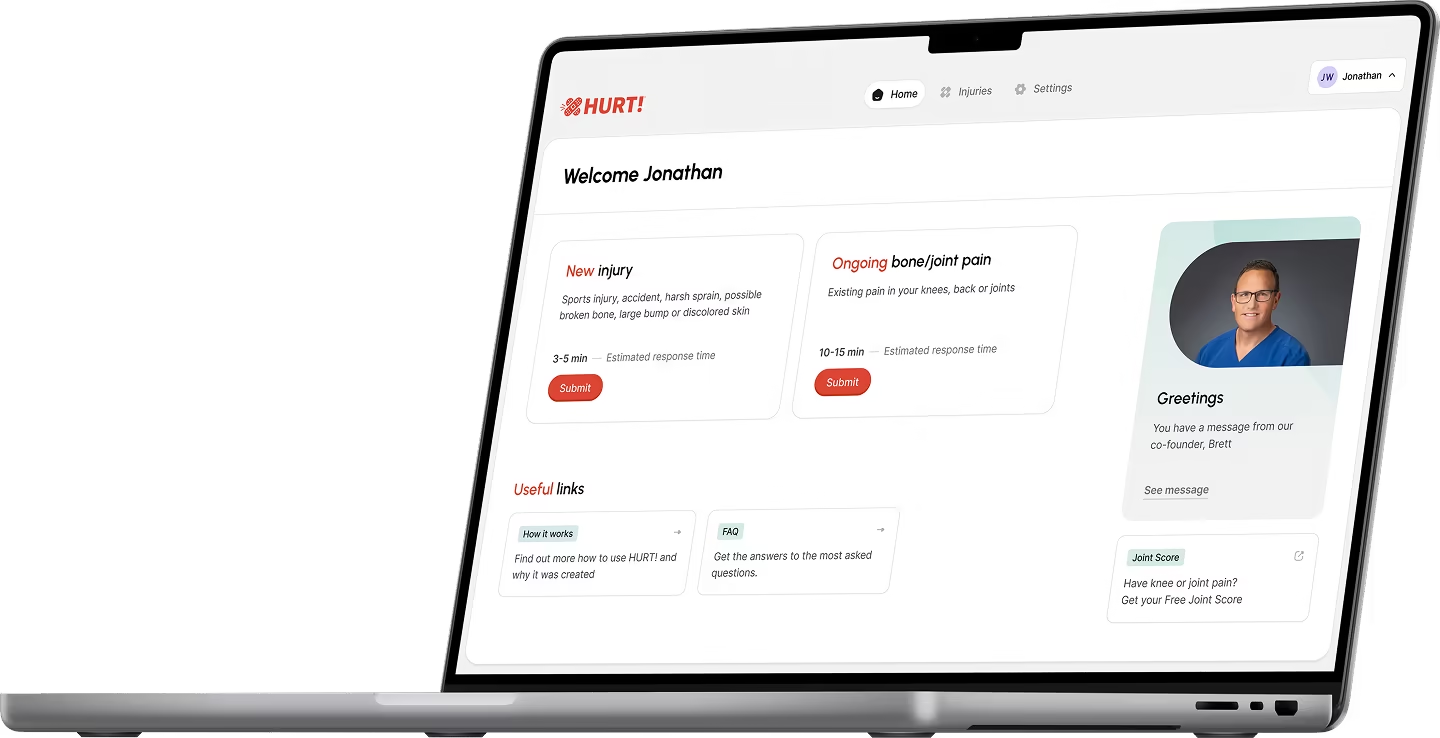
An orthopedic app that doesn't surface performance data is a feature, not a strategic asset. You should be able to see, at minimum:
- How many cases came in and from which channels
- How many converted to appointments
- What percentage were new patients vs. returning
- Where after-hours volume is trending
That visibility is what allows you to connect your digital investment to actual practice growth. If a vendor can't show you a real-time dashboard before you sign, ask why.
6. Give your practice brand flexibility
The right platform gives you flexibility in how your practice shows up. Whether you co-brand the experience or run it fully under your own name, patients should always feel like they're interacting with your practice, not a third-party service. That continuity builds trust and keeps your brand equity where it belongs.
7. Implementation should not be a project
A well-built orthopedic app should be operable within weeks of signing. Staff training, brand setup, and go-live coordination should be turnkey. If it isn't, the operational lift will outweigh the return in the first year.
8. Built for where healthcare is going, not where it's been
AI is reshaping how patients find, evaluate, and choose care. Practices that build technology into their access model now will operate with a structural advantage over those that wait.
The practices gaining ground on this aren't the ones who automated everything. They're the ones who used technology to extend their clinical team's reach while keeping a human in the loop where it matters most. In MSK care, that distinction is the difference between a patient who feels guided and one who feels processed.
The right orthopedic app uses AI for efficiency and speed. It reserves human judgment for the moments that require it. That balance is not a compromise. It's the standard the market is moving toward, and practices that recognize it early will be positioned differently than those who treat digital access as optional.
9. Meets patients where they already are in their decision
Patients don't always arrive ready to book. Many are sitting with something that's been bothering them for weeks, unsure whether it warrants an appointment. They're not disengaged. They're hesitant.
A well-designed orthopedic access tool sits alongside your online scheduling and catches the patients that scheduling alone doesn't. It offers a lower-friction first step: not "book an appointment," but "talk to someone and find out if you need one." That conversation is often the thing that moves a patient from considering to committed.
Think of it less as a new channel and more as a catalyst for the patients already in your orbit who just needed one more reason to act.
The Bottom Line
The best orthopedic app for your practice isn't the most feature-rich one. It's the one that captures the demand that is stalling or that you are missing, routes it accurately to your team, and proves its value in your dashboard before the quarter ends.
If you're evaluating options, start with these questions:
- Is this built specifically for MSK, or is orthopedics an aftermarket use case?
- Does it operate 24/7 with human clinical oversight?
- Does it close the routing loop, or hand off to the patient and stop there?
- Can I see my performance data in real time?
- Does it give my practice the brand flexibility we need?
- Is it built to scale with where AI and digital access are heading?
If a vendor can't answer all six clearly, keep looking.
HURT! is a structured MSK access platform built inside orthopedics — designed to capture demand, route cases with clinical precision, and give your practice the visibility to prove its value. Available 24/7, no referral required.